
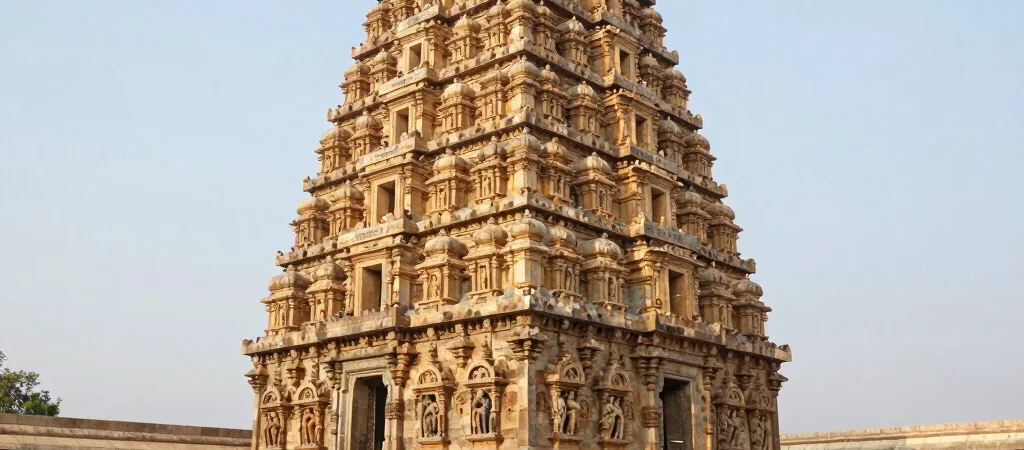
Brihadisvara Temple announces itself through scale: a broad stone complex and a towering vimana rising above the Thanjavur landscape. But looking only at its height misses what makes the building worth reading. Its architecture connects sacred space with the ambitions, resources, and skilled work of the Chola period.
Start With the Main Shrine
The vimana is the stepped tower above the main shrine, and at Brihadisvara its strong vertical profile draws the eye upward. Notice how its carefully ordered levels contrast with the broad, grounded spaces around it. That contrast makes the temple feel both monumental and composed, rather than simply tall.
Look Closer at the Walls
The temple’s inscriptions are part of its historical record, not decoration to pass on the way to the shrine. They can preserve information about donations, administration, and the people and institutions connected with the temple. Reading them requires care: an inscription is evidence from a particular moment, not a complete account of the past.
Keep Thanjavur in View
A visit makes more sense when the temple is understood as part of a living city, rather than an isolated monument. The complex continues to be a place of worship, and its courtyards and thresholds are shaped by present-day use as well as historic design. Take time to notice how people move through the space; the building’s meaning does not end with its construction.