
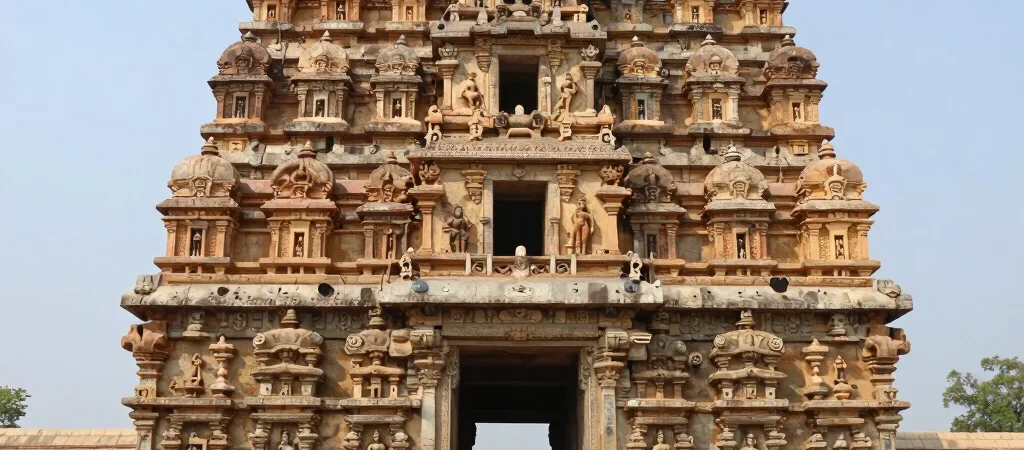
In Hampi, a landscape of monumental ruins can encourage visitors to think of the past as finished. Virupaksha Temple offers a different perspective. It remains an active place of worship, so the surrounding historic setting is also part of a lived present.
Read the Temple in Place
The temple stands within the historic landscape of Vijayanagara, where gateways, streets, and other remains help explain the scale of the former city. Look beyond the main tower to the routes that lead toward the temple and the spaces where people gather. The setting shows how a religious center belongs to a wider pattern of movement and civic life.
Notice What Continues
At an active temple, architecture is encountered through use: people approach, pause, make offerings, and move through spaces according to the practices of the day. These rhythms are not merely an addition to the monument. They are part of how the place is understood now, alongside the historical fabric and stories attached to it.
Let the Layers Stay Distinct
Hampi’s surviving buildings invite historical questions, but not every structure or tradition can be explained by one sweeping story. Separate what you can observe—the stonework, routes, and active worship—from what you have read or been told, and look for reliable context for the latter. That distinction makes room for both the archaeological landscape and the community that continues to care for its temple.