
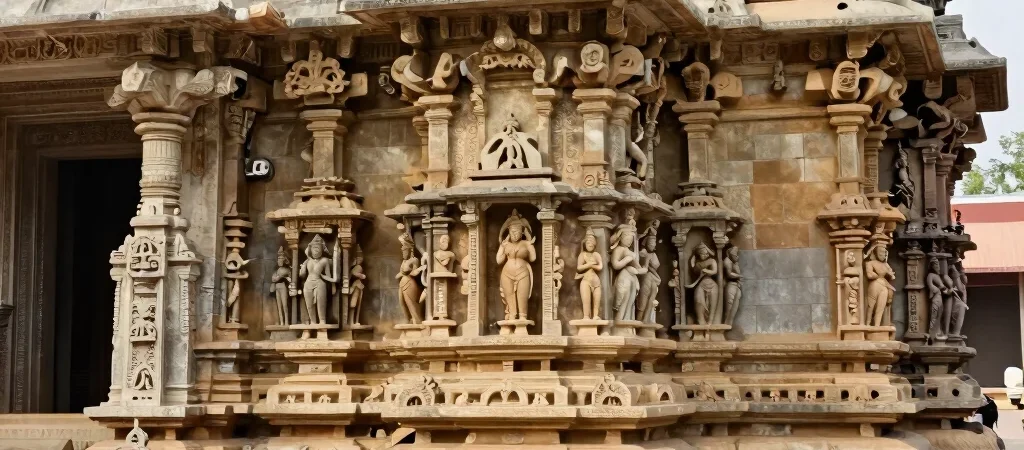
Kanchipuram is known for a rich landscape of temples, but each building deserves to be considered on its own terms. Kailasanathar Temple is a useful place to begin because its Pallava-era architecture makes the relationship between structure and carved surface especially visible. The details reward close looking more than a hurried sweep around the complex.
Notice the Stone Surface
Kailasanathar is notable for its sandstone construction, which gives the temple a different material character from the granite structures many visitors encounter elsewhere in Tamil Nadu. Watch how the carved forms sit against the walls and how light changes their depth through the day. Material is not just a background for ornament; it affects what can be shaped and how the building reads.
Look for Repeated Forms
Small shrines and repeated architectural elements help organize the temple’s exterior and draw attention around the main structure. Rather than treating each carving as a separate attraction, notice how repetition creates rhythm and how variations interrupt it. This is one way to see a temple as a designed whole, not simply a collection of details.
Connect Design to Region
Kailasanathar belongs to a regional history of temple building associated with the Pallavas, and it should not be used as a template for every temple in India—or even every temple in Tamil Nadu. Comparing its materials and forms with other local temples can reveal both shared ideas and distinct choices. Context turns a visit from spotting familiar motifs into understanding why this particular building looks the way it does.