
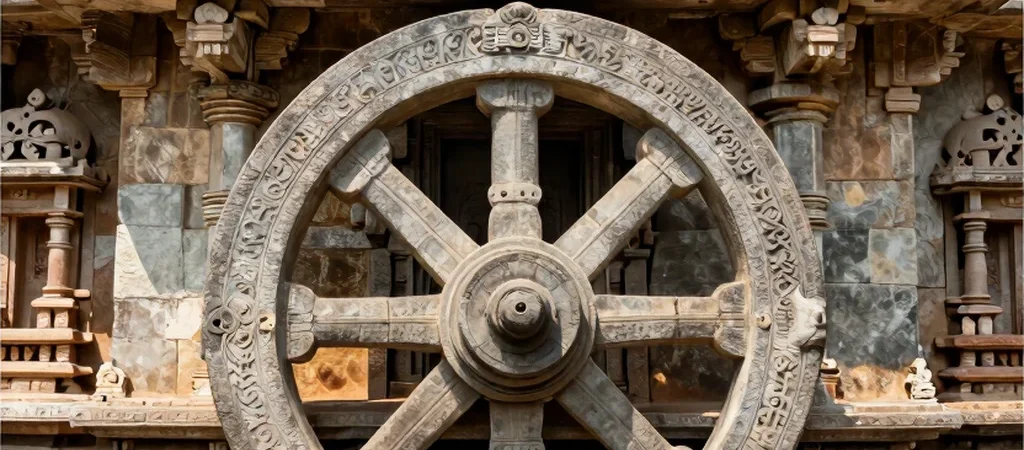
At the Sun Temple in Konark, the carved stone is impossible to ignore. Yet a close look is more useful than a quick collection of dramatic details: the monument’s design, sculpture, and surviving condition each offer different kinds of evidence. Together they help us ask better questions about the temple and its place in Odisha.
Begin With the Chariot Form
The temple is conceived in the form of the sun god Surya’s chariot, with monumental stone wheels among its most recognizable features. Read that design as part of the building’s religious and architectural program, not as an isolated visual trick. The shape gives visitors a way into the monument, while the wider structure supplies its context.
Separate Detail From Interpretation
Carvings can show choices of figure, ornament, and placement, but their meaning is not always self-evident. A confident explanation should connect a detail to sound historical or art-historical context rather than treating every image as a puzzle with one obvious answer. Look closely, then stay open to the limits of what a visitor can conclude on site.
Pay Attention to Survival
The temple visitors see today is not an untouched building from its original moment. Parts of the structure have not survived, and preservation work shapes how the site can be encountered. That is not a distraction from the architecture; it is part of the monument’s history and a reminder to distinguish the surviving fabric from reconstructions or assumptions.